
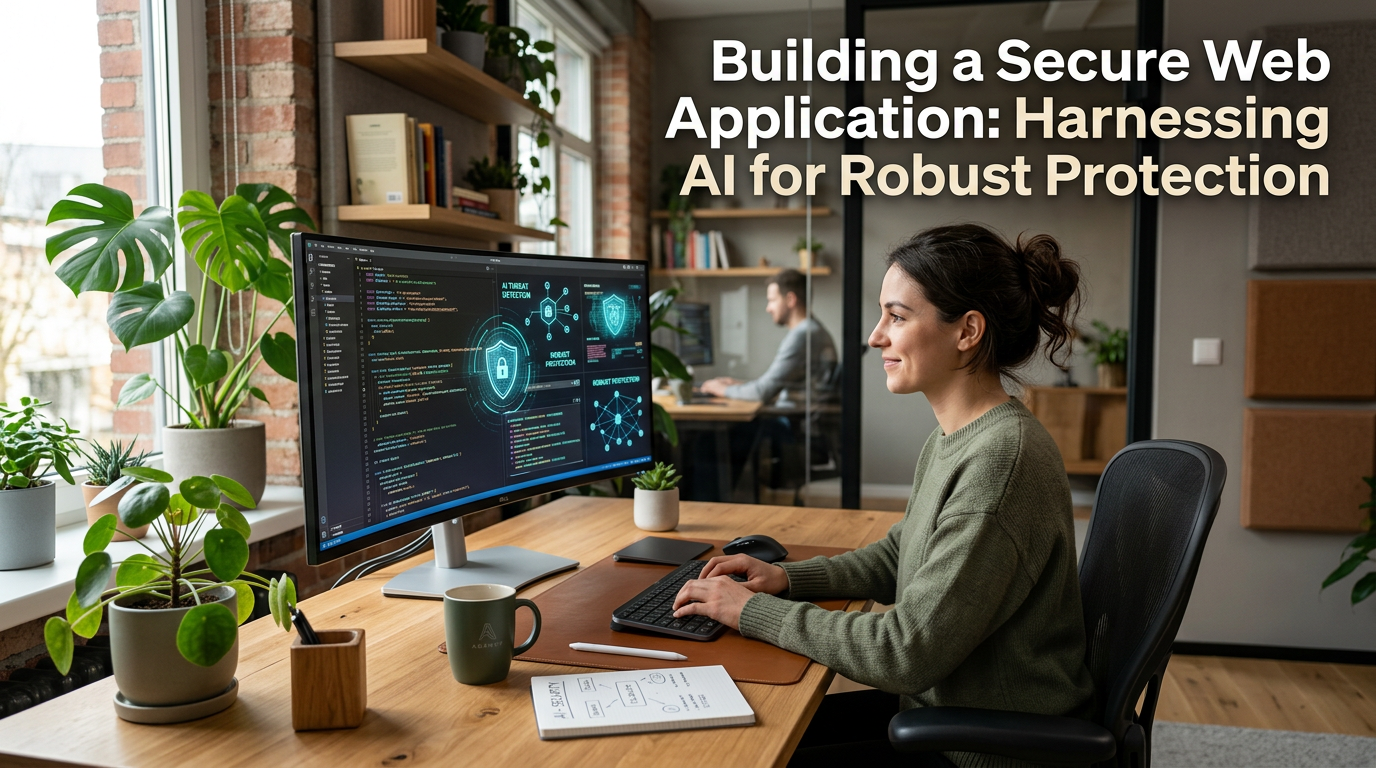
Introduction to Secure Web Application Development
In today's digital landscape, the development of secure web applications is paramount. With cyber threats evolving, businesses are under pressure to safeguard their applications against vulnerabilities. This article explores the implementation of AI-driven solutions to enhance security in web applications, emphasizing business value and measurable outcomes.
Understanding the Importance of Secure Web Applications
The necessity for secure web applications cannot be overstated. With cyberattacks becoming increasingly sophisticated, a security breach can result in significant financial losses, damage to reputation, and legal liabilities. Therefore, implementing robust security measures is crucial for any business relying on web-based applications.
The Role of AI in Web Application Security
Artificial Intelligence (AI) plays a pivotal role in advancing web application security. By analyzing vast amounts of data, AI can identify patterns and detect anomalies that might indicate a security threat. This capability allows businesses to preemptively address vulnerabilities before they can be exploited by malicious actors.
AI Solution Use Cases in Web Application Security
AI solutions offer a myriad of use cases in enhancing web application security, each contributing to a layered defense strategy.
1. Automated Threat Detection
AI can automate the identification of potential threats by continuously monitoring network activity and user behavior. Machine learning algorithms can be trained to recognize unusual patterns and flag them for further investigation, thereby reducing the response time to potential threats.
2. Vulnerability Assessments
AI-powered tools can perform comprehensive vulnerability assessments. By simulating various attack vectors, AI can identify weak spots in an application's architecture, enabling developers to address these issues before deployment.
3. User Authentication Enhancements
AI-driven biometric authentication, such as facial recognition and fingerprint scanning, enhances the security of user authentication processes. These technologies reduce reliance on traditional password-based systems, which are vulnerable to brute force attacks.
Implementation Steps for AI-Driven Security
Implementing AI-driven security measures involves several key steps, each crucial for ensuring the integrity of web applications.
Step 1: Risk Assessment
Begin by conducting a thorough risk assessment to understand the potential threats and vulnerabilities specific to your application. This assessment guides the selection of appropriate AI solutions.
Step 2: Selecting the Right AI Tools
Choose AI tools that align with your security objectives. Consider solutions that offer automated threat detection, vulnerability assessments, and user authentication enhancements.
Step 3: Integration and Testing
Integrate the selected AI tools into your application’s architecture. Conduct rigorous testing to ensure compatibility and effectiveness. This step is crucial to identify any integration issues that may arise.
Step 4: Continuous Monitoring and Updates
Implement continuous monitoring to detect new threats as they emerge. Regularly update AI models to adapt to evolving cyber threats, ensuring your security measures remain effective.
Measurable Outcomes and KPIs
To evaluate the effectiveness of AI-driven security measures, focus on key performance indicators (KPIs) that reflect the health of your application’s security posture.
Reduction in Security Incidents
A primary KPI is the reduction in security incidents post-implementation. An effective AI security solution should lead to a noticeable decline in breaches and unauthorized access attempts.
Improved Response Times
Evaluate the response times to potential threats. AI solutions should enable faster identification and mitigation of security incidents, minimizing potential damage.
User Authentication Success Rates
Monitor the success rates of user authentication processes. AI-driven enhancements should lead to a higher accuracy in authenticating users, reducing false positives and negatives.
Business Value of AI-Driven Security Measures
Investing in AI-driven security measures offers significant business value, transcending mere risk mitigation.
Enhanced Customer Trust
Demonstrating a commitment to security strengthens customer trust. Knowing their data is protected, customers are more likely to engage with your application.
Competitive Advantage
Incorporating advanced AI security measures can position your business as a leader in cybersecurity, providing a competitive edge in the market.
Cost Savings
By preventing breaches and reducing the impact of potential incidents, AI-driven security measures can lead to substantial cost savings in the long run, outweighing the initial investment in these technologies.
Conclusion
Building a secure web application is a complex but essential endeavor. By leveraging AI-driven solutions, businesses can enhance their security posture, providing robust protection against evolving cyber threats. The implementation of AI security measures not only reduces risk but also delivers measurable business value, underscoring the importance of investing in advanced cybersecurity technologies.
Challenges in Implementing AI Security Solutions
While AI-driven security solutions offer significant advantages, their implementation comes with its own set of challenges that organizations must anticipate and address.
Data Privacy Concerns
The use of AI in security often involves analyzing large volumes of sensitive data to identify potential threats. Ensuring compliance with data privacy regulations, such as GDPR or CCPA, is crucial to avoid legal ramifications and build user trust.
Integration Complexity
Integrating AI solutions with existing systems can be complex, requiring significant time and resources. Organizations need to plan for potential integration issues and allocate adequate resources to address them.
Model Training and Maintenance
AI models require continuous training and updates to remain effective against evolving threats. This ongoing maintenance demands skilled personnel and a commitment to staying at the forefront of AI advancements.
Future Trends in Web Application Security
As cyber threats continue to evolve, so too must the methods for securing web applications. Emerging trends in AI and cybersecurity are poised to reshape the landscape of web application security.
AI and Blockchain Integration
The convergence of AI and blockchain technology presents an exciting frontier in cybersecurity. Blockchain's decentralized nature can enhance data integrity, while AI can improve threat detection, creating a robust security framework.
Quantum Computing and AI
Quantum computing holds the potential to revolutionize cybersecurity. As quantum technology matures, AI algorithms will need to adapt to the computational power it offers, providing stronger encryption methods and faster threat analysis.
Zero Trust Architectures
The shift towards zero trust security models is gaining momentum. AI plays a critical role in these architectures by continuously verifying user identities and monitoring network activity for anomalies, ensuring that trust is never implicit.
Building a Culture of Security
Beyond implementing technology solutions, fostering a culture of security within an organization is essential for long-term success.
Employee Training and Awareness
Training programs should be established to educate employees about security best practices and the role they play in protecting the organization. Regular updates and interactive sessions can reinforce a security-first mindset.
Collaboration Across Departments
Security is not solely the responsibility of the IT department. Collaboration between departments, including HR, legal, and operations, is necessary to ensure a comprehensive security strategy that addresses organizational vulnerabilities.
Leadership Commitment
Strong leadership commitment to security initiatives is crucial. By prioritizing cybersecurity at the executive level, organizations can allocate the necessary resources and foster a culture that values security.
Real-World Examples of AI-Driven Security
Several organizations have successfully implemented AI-driven security measures, showcasing the tangible benefits of these technologies.
- Financial Institutions: Banks have deployed AI to monitor transactions in real-time, detecting fraudulent activity with high accuracy while reducing false positives.
- E-commerce Platforms: Online retailers use AI to analyze user behavior, identifying and blocking suspicious activities, thereby protecting customer data and reducing instances of fraud.
- Healthcare Providers: Hospitals employ AI to safeguard patient records, ensuring compliance with healthcare regulations and preventing unauthorized access.
Conclusion and Call to Action
In conclusion, the integration of AI into web application security is not just an enhancement but a necessity in today's cybersecurity landscape. Organizations that embrace AI-driven solutions can better protect their data, maintain customer trust, and secure their competitive position in the market. The time to act is now—implement AI security measures to future-proof your web applications against the ever-evolving threat landscape.