
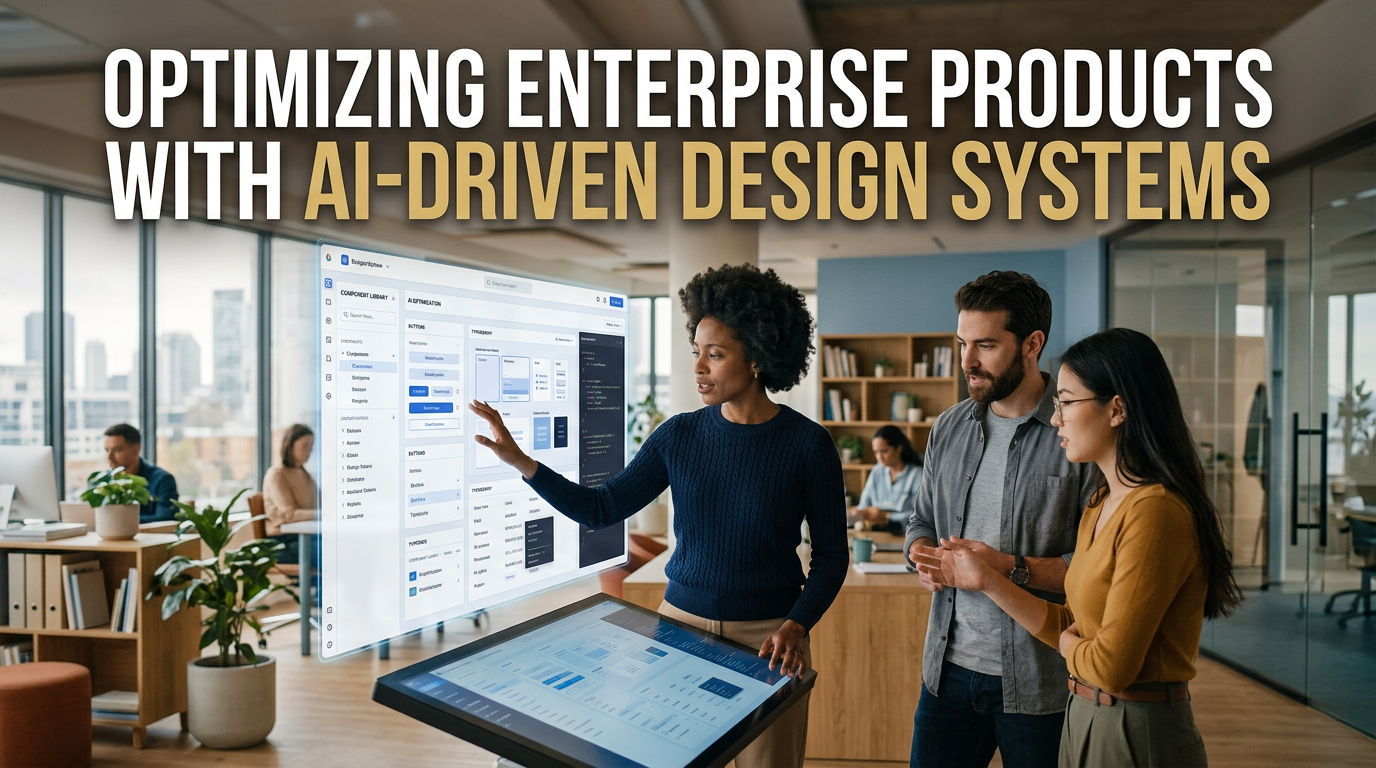
Introduction to AI-Driven Design Systems
In today's rapidly evolving digital landscape, enterprise products are increasingly reliant on robust design systems to maintain consistency, scalability, and efficiency. With the integration of Artificial Intelligence (AI), these design systems are transforming. AI-driven design systems not only streamline processes but also elevate the user experience by creating more personalized and adaptive solutions. This article delves into the use cases, implementation strategies, and the business value of AI in design systems for enterprise products, highlighting measurable outcomes and industry examples.
The Role of AI in Design Systems
AI's role in design systems is multifaceted, offering tools and methodologies that enhance the design process. Machine learning algorithms can analyze vast amounts of data to predict design trends, user preferences, and usability issues. This predictive capability allows enterprises to create designs that are not only aesthetically pleasing but also functionally robust. AI-powered design systems automate redundant tasks such as layout adjustments, color palette selections, and even typography choices, freeing up designers to focus on more creative and strategic elements.
Implementation Strategies for AI in Design Systems
Implementing AI in design systems requires a strategic approach. Enterprises need to assess their current design processes, identify areas where AI can add value, and develop a roadmap for integration. A phased implementation strategy is often recommended, beginning with pilot projects to test the efficacy of AI tools. These projects can provide valuable insights into the capabilities of AI and help in fine-tuning the systems before full-scale deployment. Collaborating with AI specialists and investing in training for in-house design teams can also facilitate a smoother transition to AI-driven systems.
Business Value of AI-Driven Design Systems
The integration of AI into design systems offers significant business value. First, it enhances efficiency by automating repetitive tasks, thereby reducing design cycle times and allowing for faster product iterations. Second, AI-driven design systems improve design consistency across different teams and platforms, ensuring that brand guidelines are adhered to. Third, the use of AI can lead to cost savings by minimizing the need for extensive manual corrections and revisions. Finally, the enhanced user experience offered by AI-optimized designs can lead to increased customer satisfaction and loyalty.
Measurable Outcomes and Case Studies
To illustrate the tangible benefits of AI-driven design systems, consider the example of a large financial services company that integrated AI into their design process. By employing AI tools for user interface design, the company reduced design iteration time by 30%, resulting in faster product launches. Additionally, AI analytics provided insights into user behavior, leading to a 20% increase in user engagement and satisfaction rates. Another case study is from an e-commerce giant that used AI to customize user experiences based on individual user data, leading to a 15% increase in conversion rates.
Challenges and Considerations
While the benefits of AI in design systems are substantial, challenges remain. Data privacy concerns are paramount, as AI relies heavily on user data to function effectively. Enterprises must ensure compliance with data protection regulations to maintain user trust. Additionally, the transition to AI-driven systems requires significant investment in technology and training. Resistance to change within design teams can also pose a hurdle, necessitating effective change management strategies and clear communication of AI's benefits.
Conclusion
AI-driven design systems represent the future of enterprise product design, offering unmatched efficiency, consistency, and user-centered design capabilities. By strategically implementing AI, enterprises can not only improve their design processes but also achieve measurable business outcomes such as reduced costs, faster time-to-market, and enhanced user satisfaction. As technology continues to evolve, the potential for AI in design systems will only grow, making it an indispensable tool for forward-thinking enterprises.
Future Trends in AI-Driven Design Systems
As AI technology continues to advance, we can anticipate several emerging trends in AI-driven design systems that will further revolutionize enterprise product design. One such trend is the integration of augmented reality (AR) and virtual reality (VR) into design processes. These technologies, powered by AI, can create immersive design environments that offer real-time, interactive user experience testing and customization. By simulating real-world interactions, designers can gain deeper insights into user behavior and preferences.
Another trend is the growing focus on ethical AI in design systems. As AI plays a more significant role in decision-making processes, enterprises are increasingly concerned with ensuring that these systems operate in a transparent, fair, and unbiased manner. This focus on ethical AI will drive the development of new standards and practices to guide the responsible use of AI in design.
Collaborative AI Platforms
Collaborative AI platforms are set to become more prevalent, enabling cross-functional teams to work together more effectively. These platforms leverage AI to facilitate communication and collaboration between designers, developers, marketers, and other stakeholders, creating a cohesive workflow that minimizes silos and enhances productivity. By using AI to streamline project management, teams can reduce time-to-market and improve the overall quality of design outputs.
Building a Sustainable AI-Driven Design System
For enterprises to fully leverage AI in their design systems, sustainability must be a key consideration. Sustainable design systems not only focus on the environmental impact of design processes but also on the long-term viability of the systems themselves. This includes ensuring that AI models are continuously updated and maintained to remain accurate and effective. Additionally, creating a culture of continuous learning and adaptation within design teams will be crucial to keep pace with technological advancements and evolving user expectations.
- Scalable AI Infrastructure: Investing in scalable AI infrastructure is essential for supporting the growing data and processing demands of AI-driven design systems. This includes leveraging cloud-based solutions that offer flexibility and scalability.
- Human-AI Collaboration: Encouraging a symbiotic relationship between human designers and AI tools can lead to more innovative and effective design solutions. By focusing on augmenting human creativity rather than replacing it, enterprises can maximize the potential of AI in design.
- Feedback Loops: Implementing robust feedback loops within design systems allows for continuous improvement and refinement. By collecting and analyzing user feedback, AI systems can adapt and evolve to deliver better outcomes.
The Role of AI in Enhancing Accessibility
AI-driven design systems have the potential to enhance accessibility in digital products. By utilizing AI to analyze user interactions and identify accessibility barriers, enterprises can create more inclusive designs that cater to users with diverse needs. AI can also automate the generation of alternative text for images, improve navigation for screen readers, and suggest adjustments for color contrast and font size.
By prioritizing accessibility, enterprises not only comply with legal requirements but also expand their user base and improve customer satisfaction. The use of AI in accessibility efforts ensures that digital products are more usable and enjoyable for everyone, regardless of their abilities.
Conclusion: Embracing AI-Driven Design Systems for the Future
The future of enterprise product design lies in embracing AI-driven design systems. While challenges exist, the benefits of AI – from increased efficiency and cost savings to enhanced user experiences and accessibility – are too significant to ignore. By staying ahead of emerging trends and focusing on sustainable, ethical, and inclusive design practices, enterprises can unlock the full potential of AI in design systems. As AI technology evolves, those who adapt and innovate will be best positioned to lead in the competitive digital landscape.