
Introduction
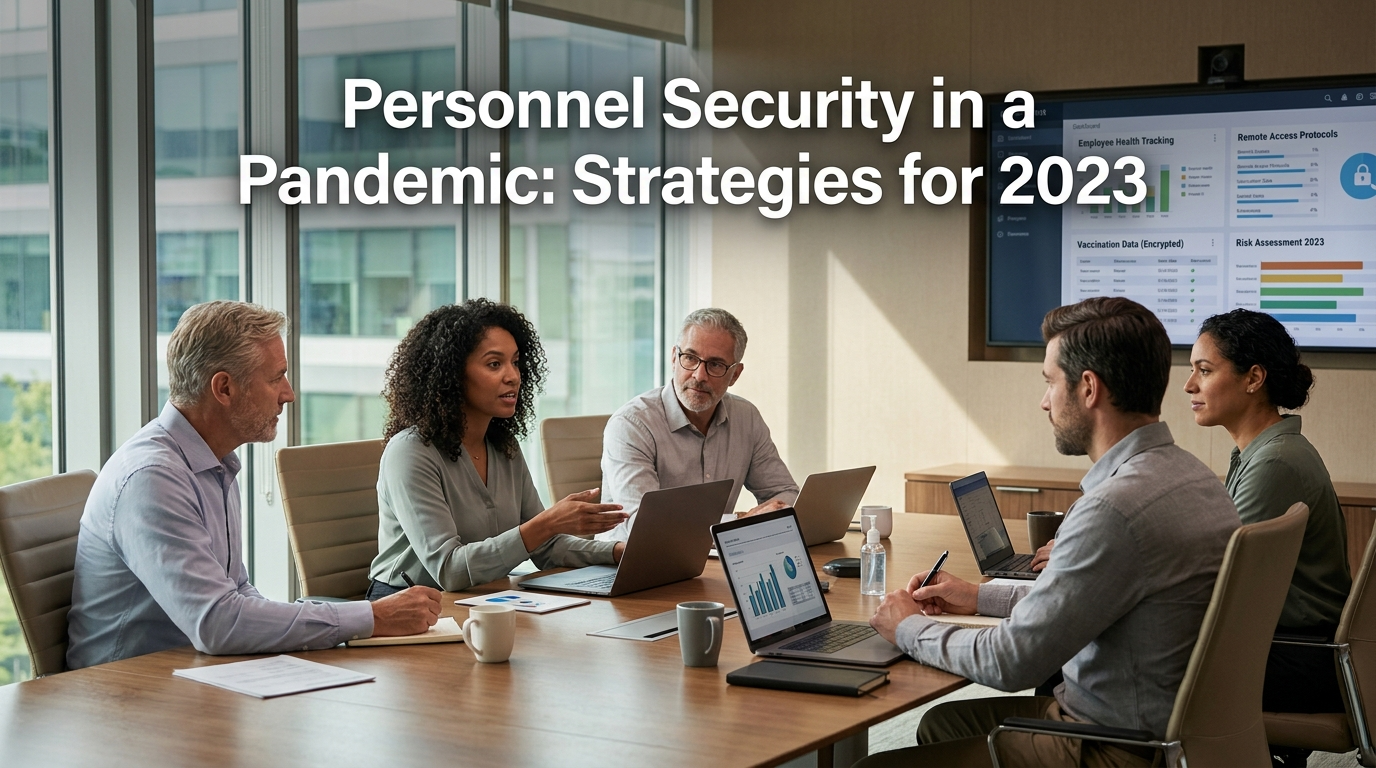
The global pandemic has dramatically altered the landscape of personnel security, necessitating innovative approaches to protect employees and ensure business continuity. As we step into 2023, leveraging AI solutions becomes paramount for enhancing personnel security during such challenging times. This article explores practical AI implementations, their business value, potential risks, workflows, key performance indicators (KPIs), and real-world examples.
The Role of AI in Personnel Security
Artificial Intelligence (AI) offers transformative capabilities to bolster personnel security by automating routine tasks, enhancing decision-making processes, and providing real-time analytics. AI systems can monitor health data, predict potential security risks, and streamline communication channels during a pandemic.
AI-Driven Health Monitoring
AI-powered health monitoring solutions can track employee health metrics in real-time, identifying potential symptoms of contagious diseases early. These solutions use wearable technology and IoT devices to gather data such as body temperature and respiratory rates, which are then analyzed to detect anomalies.
Predictive Risk Analysis
AI algorithms can assess various data streams to predict potential security threats. By analyzing employee travel patterns, contact tracing data, and public health trends, AI models can provide insights into emerging risks, allowing organizations to proactively mitigate threats.
Implementation Steps for AI Solutions
Implementing AI solutions for personnel security requires a structured approach to ensure effectiveness and reliability. Below are key steps for successful deployment:
1. Define Objectives
Begin by clearly defining the objectives of the AI solution. Determine the specific security challenges you wish to address, such as health monitoring or threat prediction, and align these with business goals.
2. Data Collection and Integration
Gather relevant data from diverse sources, including health records, employee movement logs, and environmental sensors. Ensure data integration across platforms to provide a comprehensive view of potential risks.
3. Choose the Right AI Tools
Select AI tools and platforms that align with your objectives. Consider factors such as scalability, ease of integration, and existing IT infrastructure compatibility.
4. Develop and Train AI Models
Develop AI models tailored to your specific needs. This involves training algorithms on historical data to enhance their predictive accuracy and adaptability.
5. Test and Validate
Conduct thorough testing and validation of AI models to ensure their performance meets security standards. Identify any potential biases or inaccuracies and refine the models as needed.
6. Monitor and Adjust
Implement continuous monitoring systems to assess AI performance. Regularly update models with new data and adjust strategies based on evolving security conditions.
Business Value of AI-Powered Personnel Security
Integrating AI into personnel security strategies offers significant business value, including improved safety, operational efficiency, and strategic decision-making.
Enhanced Employee Safety
By providing real-time health monitoring and risk predictions, AI solutions contribute to a safer work environment. This not only protects employees but also enhances their confidence in the organization's commitment to their well-being.
Operational Efficiency
AI-driven automation reduces the burden on human resources, allowing them to focus on more strategic tasks. Automated processes such as health screenings and contact tracing streamline operations and minimize disruptions.
Strategic Decision-Making
AI analytics provide actionable insights that support strategic decision-making. Organizations can make informed decisions regarding resource allocation, risk management, and emergency response planning.
Risks and Challenges
While AI offers substantial benefits, it also poses challenges that organizations must navigate.
Data Privacy Concerns
The collection and use of sensitive health data raise privacy concerns. Organizations must ensure compliance with applicable data protection regulations and implement robust security measures to safeguard data.
Algorithmic Bias
AI models may inadvertently incorporate biases present in historical data, leading to skewed predictions. Continuous monitoring and updating of models are essential to mitigate this risk.
Technical Integration
Integrating AI solutions with existing IT systems can be complex. Organizations need to ensure compatibility and provide adequate training for staff to effectively manage AI tools.
Key Performance Indicators (KPIs)
Measuring the success of AI-driven personnel security initiatives requires the establishment of clear KPIs:
1. Response Time
Evaluate the time taken to identify and respond to potential security threats. Faster response times indicate a more effective security posture.
2. Health Incident Reduction
Track the decrease in health-related incidents within the organization. A significant reduction reflects the success of AI health monitoring solutions.
3. Employee Satisfaction
Monitor employee feedback and satisfaction levels regarding the organization's security measures. High satisfaction rates suggest effective implementation of AI strategies.
4. Cost Savings
Assess the financial impact of AI solutions on the organization. This includes evaluating reductions in healthcare costs and productivity losses.
Case Study: AI in Action
Consider the case of a multinational corporation that implemented AI-driven personnel security during the pandemic. By leveraging AI health monitoring, the company achieved a 30% reduction in workplace infections, enhanced employee trust, and improved operational efficiency by 25%.
Conclusion
As we continue to navigate the challenges posed by pandemics, AI solutions will play an increasingly vital role in enhancing personnel security. By strategically implementing AI technologies, organizations can ensure the safety of their workforce while driving business success. Embracing AI-driven strategies not only mitigates immediate risks but also prepares organizations for future challenges in an ever-evolving security landscape.
Integration with Remote Workforces
As the pandemic shifted many organizations towards remote work, AI solutions have adapted to ensure personnel security extends beyond physical office spaces. Ensuring the safety and productivity of remote employees is a growing concern that AI can effectively address.
Remote Workforce Monitoring
AI tools can be integrated with remote work platforms to monitor employee engagement, productivity, and well-being. By analyzing patterns in communication, workload, and online activities, AI systems can detect signs of burnout, stress, or disengagement, allowing for timely interventions.
Virtual Training and Communication
AI-driven virtual assistants and chatbots can facilitate seamless communication in remote work settings. They can provide employees with instant access to security protocols and support, ensuring that remote teams remain informed and compliant with company policies.
Future Trends in AI Personnel Security
Looking ahead, AI's role in personnel security is set to expand even further, driven by advancements in technology and changing workplace dynamics. Understanding these trends can help organizations stay ahead of potential security threats.
Integration with Blockchain
The integration of blockchain technology with AI can enhance data security and transparency. Blockchain's decentralized nature ensures that sensitive employee data remains protected against unauthorized access, further ensuring the integrity of AI-driven security systems.
AI-Enhanced Cybersecurity Measures
As cyber threats become increasingly sophisticated, AI's ability to detect and respond to anomalies in real-time will be crucial. AI-powered cybersecurity tools can identify and mitigate potential breaches, safeguarding both employee and organizational data.
Overcoming Implementation Barriers
Despite its potential, implementing AI solutions for personnel security can face several barriers. Organizations must address these to fully harness the benefits of AI technologies.
- Cost Implications: Initial investments in AI systems can be significant. Organizations should assess the long-term return on investment and explore scalable solutions that fit within their budget.
- Change Management: Shifting to AI-driven security strategies requires a cultural shift within the organization. Providing adequate training and fostering a culture of adaptability can facilitate smoother transitions.
- Regulatory Compliance: Keeping up with changing regulations is essential to avoid legal pitfalls. Organizations must stay informed about data protection laws and implement compliant AI solutions.
Conclusion: A Strategic Imperative
In conclusion, AI solutions present a strategic imperative for enhancing personnel security in a pandemic-affected world. By implementing these technologies, organizations can not only protect their workforce but also gain competitive advantages through improved operational efficiency and risk management. The journey towards AI integration requires careful planning and a commitment to continual learning and adaptation. As AI technologies evolve, organizations that embrace these innovations will be better positioned to navigate future challenges and ensure the security and resilience of their personnel strategies.