
Introduction
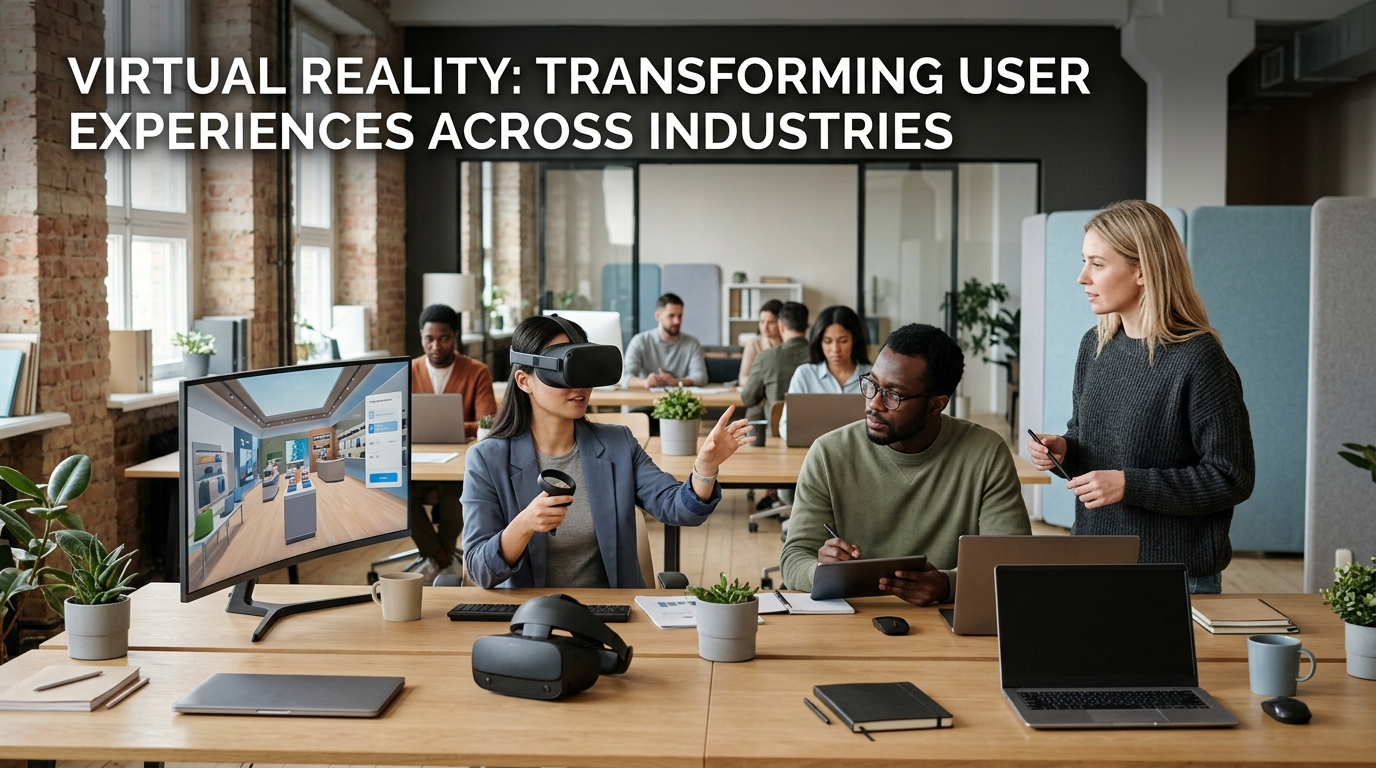
Virtual Reality (VR), propelled by advancements in Artificial Intelligence, is redefining user experiences across various industries. From healthcare to entertainment, the integration of VR technology is not just a trend but a significant shift towards immersive and engaging user interactions. This article explores the practical implementation of VR, its business value, potential risks, workflows, KPIs, and real-world examples.
Practical Implementation of Virtual Reality
Virtual Reality technology involves creating a simulated environment that users can interact with in a seemingly real or physical way using special electronic equipment. Implementing VR solutions requires a blend of hardware, software, and content development.
In healthcare, for instance, VR is used to simulate surgical procedures, allowing medical professionals to practice in a risk-free environment. Using AI algorithms, these simulations can adapt to a user's skill level, providing personalized training experiences. Similarly, in education, VR can create virtual classrooms where students can explore historical events or complex scientific concepts interactively.
Business Value of Virtual Reality
The adoption of VR across industries presents substantial business benefits. In retail, VR can transform the shopping experience by allowing customers to virtually try on clothes or visualize how furniture would look in their homes. This not only enhances customer satisfaction but also reduces return rates, thereby increasing profitability.
In real estate, VR tours enable potential buyers to explore properties remotely, saving time and resources. This technology significantly shortens the sales cycle and broadens the market reach. Furthermore, VR in corporate training can dramatically reduce costs associated with traditional training methods while improving employee engagement and retention.
Risks and Challenges
Despite its advantages, VR implementation is not without challenges. The initial cost of VR hardware and software can be high, and integrating VR into existing systems may require significant technical adjustments. Additionally, there are concerns about user privacy and data security, as VR systems often collect detailed information about user behavior.
Another challenge is the potential for VR-induced motion sickness, which could affect user adoption rates. It is essential for businesses to consider these factors and develop strategies to mitigate such risks effectively.
Workflows and Implementation Strategies
Successful VR implementation involves a clear workflow that includes defining objectives, selecting appropriate technology, developing content, and integrating VR solutions into existing processes. It begins with understanding the specific use-case and identifying the target audience. Businesses must then choose suitable VR hardware and software, considering factors such as compatibility, scalability, and user interface.
Content development is a critical component, as the effectiveness of VR experiences hinges on high-quality, engaging content. This may require collaboration with VR content creators and developers. Lastly, businesses need to integrate VR solutions with their current systems, ensuring a seamless user experience.
Key Performance Indicators (KPIs)
To measure the success of VR implementations, businesses should establish clear KPIs. In retail, key metrics might include the reduction in product return rates, increased average transaction value, and improved customer satisfaction scores. In training, KPIs could involve metrics such as time to competence, training completion rates, and employee retention statistics.
Other general KPIs could include user engagement levels, return on investment (ROI), and adoption rates. Regularly reviewing these indicators helps businesses refine their VR strategies and maximize their benefits.
Examples of Virtual Reality Transformations
Several companies have successfully harnessed VR technology to enhance their operations. For example, Walmart uses VR for employee training, improving decision-making skills and customer service by simulating real-life scenarios. This approach has not only cut training costs but also led to a more prepared and responsive workforce.
In the automotive industry, brands like Audi and Volvo employ VR to offer virtual test drives, allowing customers to experience vehicles without physically being present at a dealership. This innovative approach has expanded their market reach and improved customer engagement.
Conclusion
Virtual Reality, with its compelling user experiences, offers transformative potential across various sectors. While challenges exist, the business value, when implemented effectively, is undeniable. By focusing on strategic implementation, addressing risks, and measuring outcomes through KPIs, industries can harness the full potential of VR technology to revolutionize their operations and enhance user experiences.
Future Trends in Virtual Reality
As the technology behind Virtual Reality continues to evolve, new trends are emerging that promise to further revolutionize user experiences and business operations. One such trend is the convergence of VR with other cutting-edge technologies like Augmented Reality (AR) and Extended Reality (XR). This integration is poised to create even more immersive environments, where users can seamlessly interact with both virtual and real-world elements.
Another trend is the increasing accessibility of VR technology. As hardware becomes more affordable and software more intuitive, smaller businesses and individual entrepreneurs can leverage VR without the need for significant investment. This democratization of VR technology could lead to a surge in innovative applications across industries.
VR in Remote Work and Collaboration
The rise of remote work has accelerated the adoption of VR as a tool for collaboration and communication. VR platforms can create virtual offices where teams interact as if they were in the same physical space. This technology enhances remote meetings by providing a sense of presence and engagement that traditional video conferencing tools often lack.
- Virtual brainstorming sessions allow creative teams to visualize and manipulate ideas collectively.
- Interactive 3D models enable engineers and designers to collaborate on complex projects regardless of geographical location.
- VR training modules can help remote employees gain hands-on experience with equipment or processes they cannot physically access.
Customization and Personalization in VR
Personalization is a significant focus in VR development, aiming to enhance user engagement by tailoring experiences to individual preferences. AI-driven analytics can gather user data to customize VR environments in real-time, offering bespoke experiences that enhance satisfaction and retention.
For instance, in the tourism industry, VR can offer personalized virtual tours that adapt based on user interests, providing a more engaging and memorable experience. Similarly, in retail, VR platforms can analyze shopping behavior to suggest products and create personalized shopping environments.
Virtual Reality's Role in Mental Health and Therapy
VR is increasingly being explored as a tool for mental health treatment and therapy, offering innovative ways to address psychological issues. Virtual environments can be used to simulate stress-inducing situations in a controlled manner, allowing therapists to guide patients through exposure therapy safely.
VR therapy can also aid in the treatment of phobias, PTSD, and anxiety disorders by gradually exposing patients to their fears in a secure and manageable way. Additionally, virtual mindfulness environments are being developed to help users practice meditation and stress reduction techniques.
Barriers to Adoption
Despite the potential benefits, several barriers to widespread VR adoption remain. High costs, technical complexity, and the need for specialized skills can deter businesses from implementing VR solutions. Furthermore, there is a need for more standardized protocols to ensure compatibility and interoperability between different VR systems.
Overcoming these barriers requires collaboration between technology developers, industry stakeholders, and policymakers to create supportive ecosystems and frameworks that facilitate VR integration.
Case Studies and Success Stories
Beyond the already mentioned examples, numerous other success stories highlight the transformative impact of VR technology. In manufacturing, companies like Boeing are using VR to train workers on complex assembly processes, leading to reduced error rates and increased safety.
In sports, professional teams are adopting VR to enhance training sessions, allowing athletes to simulate game scenarios and improve decision-making skills. This has resulted in better performance and a competitive edge.
Moreover, the education sector continues to benefit, with institutions like Stanford University offering VR-based courses that allow students to experience historical events or intricate scientific phenomena first-hand, enriching the learning experience.
The Road Ahead for Virtual Reality
The future of Virtual Reality is bright, with endless possibilities for innovation and enhancement across various sectors. As technology advances, VR is likely to become even more integrated into everyday life, reshaping how we work, learn, and play.
To fully capitalize on VR's potential, businesses and educators must remain adaptable, embracing new developments and continuously refining their VR strategies to meet evolving user needs and expectations. By doing so, they can ensure that Virtual Reality remains at the forefront of technological innovation.