
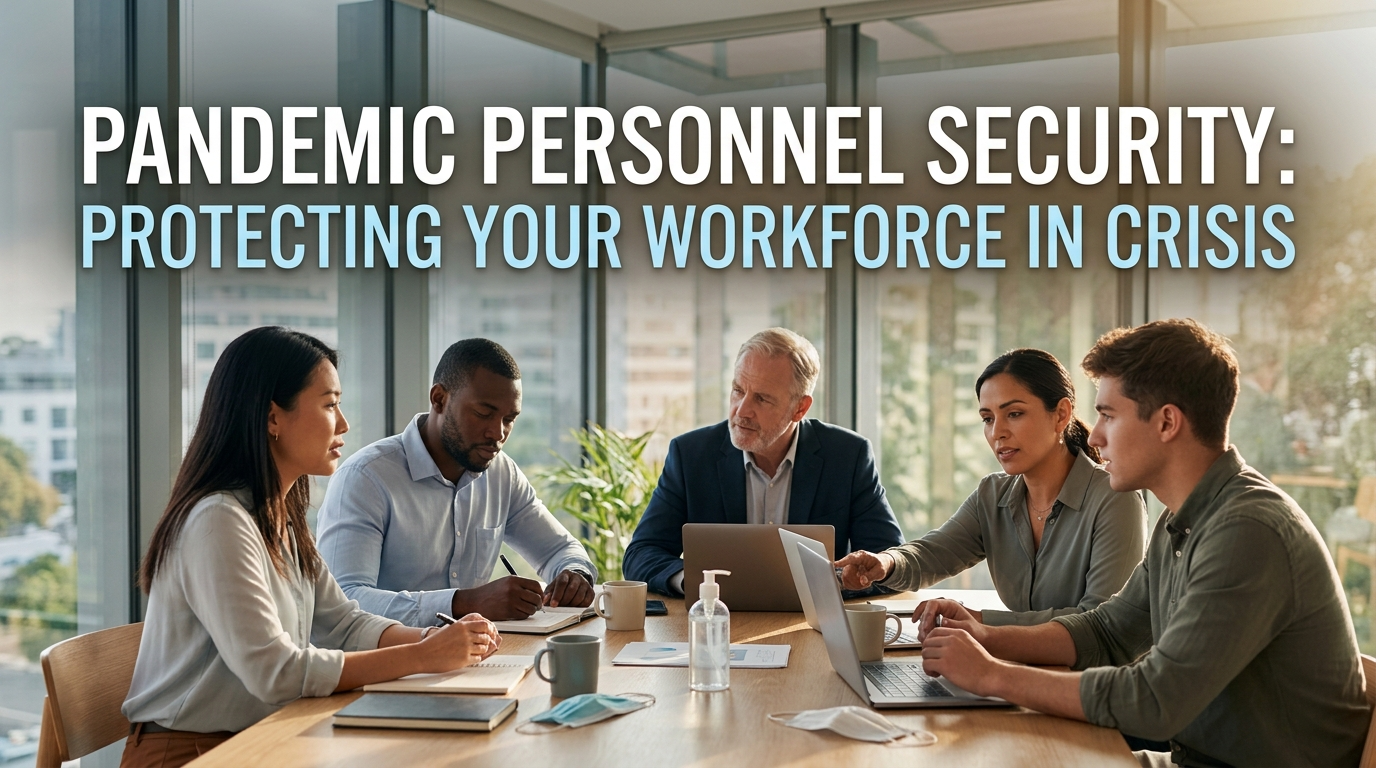
The Importance of Personnel Security in a Pandemic
The ongoing impact of global pandemics has underscored the critical importance of personnel security. Ensuring the safety and security of your workforce is not just a moral obligation, but a strategic business imperative. Companies must adapt to rapidly changing conditions to protect their employees and maintain business continuity. Personnel security in a pandemic involves a multi-faceted approach that encompasses health, psychological well-being, logistics, and cybersecurity.
Understanding the Risks
Pandemics introduce a wide range of risks that can affect personnel security. These include health risks, psychological stress, logistical challenges, and cybersecurity threats. Understanding these risks is the first step in developing effective security measures. Each of these risks requires specific strategies to mitigate their impact on your workforce.
Health Risks
Health risks are the most obvious threat during a pandemic. Ensuring employees have access to healthcare, personal protective equipment (PPE), and information on how to protect themselves is crucial. Organizations must establish partnerships with healthcare providers to facilitate timely medical assistance for their workforce. Moreover, regular health screenings and vaccinations should be part of the health risk management strategy.
- Provide PPE to all employees, especially front-line workers.
- Implement health screening protocols at workplace entrances.
- Facilitate access to vaccines and healthcare services.
Psychological Stress
The psychological impact of a pandemic can be significant. Employees may face anxiety, stress, and depression due to uncertainty and the challenges of working in isolation. To mitigate these effects, proactive mental health support is essential.
- Offer virtual mental health workshops and seminars.
- Maintain open communication channels for employees to express concerns.
- Encourage regular breaks and work-life balance.
Logistical Challenges
Logistical issues include the difficulties of maintaining operations with a remote workforce, supply chain disruptions, and potential labor shortages. Companies need to develop flexible logistics plans that can adapt to changing conditions.
- Establish remote work policies and provide necessary equipment.
- Develop contingency plans for supply chain disruptions.
- Implement flexible work arrangements to accommodate different employee needs.
Cybersecurity Threats
With the shift to remote work, cybersecurity threats have increased. Securing digital communications and ensuring safe access to company resources are vital. A robust cybersecurity framework helps prevent data breaches and protects sensitive information.
- Implement multi-factor authentication for all systems.
- Conduct regular cybersecurity training sessions.
- Utilize virtual private networks (VPNs) for secure remote access.
Strategies for Ensuring Personnel Security
Implementing a comprehensive security strategy is key to protecting your workforce during a pandemic. Here are some strategies to consider:
Health and Safety Protocols
Develop clear health and safety protocols, including guidelines for social distancing, hygiene practices, and use of PPE. Regular training and communication are essential to ensure compliance. Employers should also consider revising workplace layouts to accommodate social distancing.
- Organize regular briefings on health protocols.
- Install sanitation stations throughout facilities.
- Redesign office spaces to ensure physical distancing.
Mental Health Support
Provide access to mental health resources and support systems. This could include counseling services, stress management workshops, and employee assistance programs. Encouraging a supportive work environment is crucial for employee morale.
- Partner with mental health professionals for counseling services.
- Launch an employee assistance program (EAP) for ongoing support.
- Encourage peer support groups to foster community.
Remote Work Infrastructure
Invest in robust technology infrastructure to support remote work. Ensure employees have the tools they need to work effectively from home, including secure access to company systems. Flexibility in work hours can also enhance productivity.
- Provide laptops and secure access devices for remote work.
- Ensure high-speed internet access for employees working from home.
- Arrange virtual team-building activities to maintain team cohesion.
Cybersecurity Measures
Enhance cybersecurity measures to protect against threats. This includes implementing strong authentication protocols, using VPNs, and providing regular training on recognizing phishing attempts and other cyber threats. A dedicated IT team to monitor threats is highly recommended.
- Set up an incident response team for quick reaction to cyber threats.
- Regularly update software to protect against vulnerabilities.
- Educate employees on best practices for online security.
Process Steps for Implementation
Developing a personnel security plan involves several key steps. A structured approach ensures comprehensive coverage of all potential threats and vulnerabilities:
Risk Assessment
Conduct a comprehensive risk assessment to identify potential threats and vulnerabilities. This will inform the development of your security strategy. Engaging with risk management experts can provide deeper insights.
Policy Development
Develop clear policies and procedures to address identified risks. These should be regularly reviewed and updated as necessary. Policies should be aligned with legal and regulatory requirements.
Employee Training
Regular training is essential to ensure employees understand the policies and know how to implement them effectively. Training should be interactive and cover all aspects of personnel security.
Monitoring and Evaluation
Monitor the effectiveness of your security measures and evaluate them regularly to identify areas for improvement. Continuous feedback loops can help refine strategies over time.
Use Cases and Examples
Many companies have successfully implemented personnel security measures during the pandemic. For example, a major tech company transitioned to remote work early in the pandemic, providing employees with ergonomic home office setups and robust IT support to ensure productivity and security. Another example is a healthcare provider that enhanced its telemedicine services to minimize physical contact while maintaining patient care.
Measuring Success
To measure the success of your personnel security measures, consider key performance indicators (KPIs) such as employee health and safety records, productivity levels, and the frequency of cybersecurity incidents. Regularly analyzing these metrics helps in refining strategies and demonstrating the impact of security measures.
- Track employee wellness surveys to gauge mental health.
- Monitor productivity levels to ensure remote work effectiveness.
- Assess the number of cybersecurity breaches to evaluate IT security.
Conclusion
Ensuring personnel security in a pandemic is a complex but critical task. By understanding the risks, developing comprehensive strategies, and implementing robust processes, companies can protect their workforce and ensure business continuity. As part of a forward-thinking approach, partnering with experts like 4A Labs can provide valuable insights and support in navigating these challenges. The pandemic has taught us that a proactive approach to personnel security not only safeguards employees but also strengthens the overall resilience of the business.
Adapting to Future Challenges
As the world continues to navigate the aftermath of recent pandemics, organizations must remain vigilant and prepared for future challenges. The landscape of personnel security is continually evolving, and businesses must anticipate and adapt to emerging threats to protect their workforce effectively.
Continuous Improvement
Personnel security strategies should not be static. By establishing a culture of continuous improvement, companies can ensure that their measures evolve alongside new risks and technologies. Regular audits and feedback mechanisms are vital components of this process.
- Conduct periodic reviews and updates of security protocols.
- Engage employees in feedback sessions to identify potential areas for enhancement.
- Stay informed about technological advancements that could bolster security efforts.
Scenario Planning
Planning for various scenarios is a crucial aspect of preparing for future pandemics. By considering different potential situations, businesses can develop flexible strategies that can be quickly adapted as circumstances change.
- Create detailed response plans for multiple pandemic scenarios.
- Simulate emergency drills to test readiness and adaptability.
- Involve cross-departmental teams in scenario planning for diverse perspectives.
Leveraging Technology
Technology plays a pivotal role in enhancing personnel security. Beyond traditional measures, innovative technological solutions can provide significant advantages in monitoring, communication, and decision-making processes.
- Utilize AI-powered analytics for real-time risk assessment.
- Deploy IoT devices to monitor environmental factors that could affect employee health.
- Implement collaborative platforms to ensure seamless communication during crises.
Building a Resilient Culture
A resilient organizational culture is foundational to effective personnel security. Employees should be empowered and educated to take an active role in maintaining their safety and the safety of their colleagues. This requires ongoing commitment from leadership and a focus on cultivating an environment of trust and adaptability.
Leadership Commitment
Strong leadership commitment to personnel security is crucial. Leaders should demonstrate their dedication through transparent communication, resource allocation, and personal involvement in security initiatives.
- Leaders should regularly communicate security priorities and updates.
- Allocate resources for continuous training and development related to security.
- Lead by example in adhering to security protocols and initiatives.
Employee Engagement
Fostering employee engagement in security efforts enhances overall effectiveness. By involving employees in the development and implementation of security measures, businesses can tap into a wealth of insights and create a more committed workforce.
- Include employee representatives in security planning committees.
- Encourage employees to contribute ideas for improving security measures.
- Recognize and reward proactive security contributions from employees.
As organizations prepare for future pandemics and other crises, it is essential to integrate personnel security into the core of their operations. Through strategic planning, technological innovation, and cultural resilience, businesses can protect their workforce and thrive amidst uncertainty.