
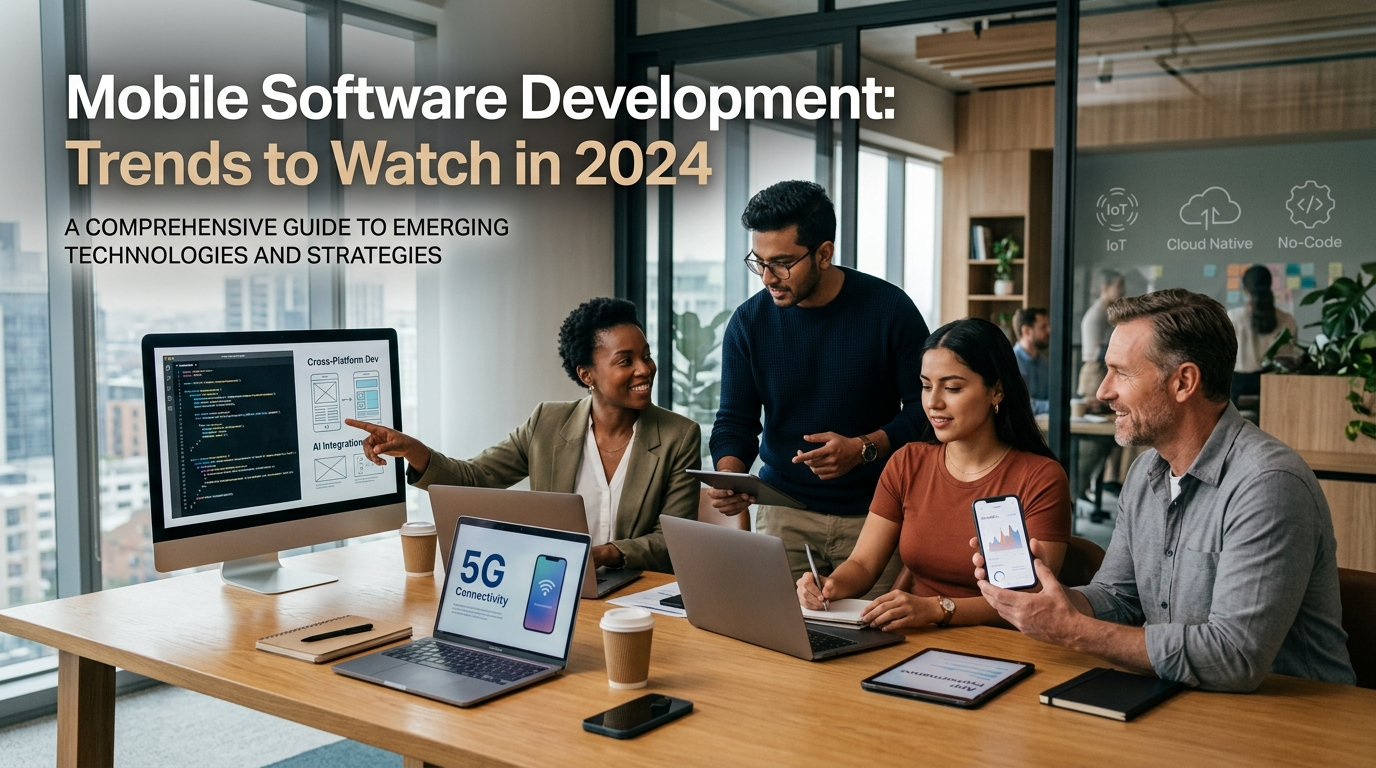
Introduction to Mobile Software Development Trends
As we approach 2024, the mobile software development landscape continues to evolve at a rapid pace, driven by advances in artificial intelligence (AI) and digital transformation. With the increasing reliance on mobile technologies, businesses are seeking innovative solutions to stay competitive and meet customer demands. This article explores critical trends in mobile software development, focusing on AI solution use cases, practical implementation, business value, risks, and key performance indicators (KPIs).
AI-Driven Innovation in Mobile Apps
AI has become a cornerstone of modern mobile software development, offering capabilities that enhance user experiences, streamline operations, and unlock new business opportunities. Some of the key areas where AI is making a significant impact include:
1. Personalized User Experiences
AI algorithms enable mobile apps to deliver personalized content and recommendations by analyzing user behavior and preferences. This not only improves user satisfaction but also increases engagement and retention.
2. Enhanced Security
AI-powered security features, such as facial recognition and biometric authentication, are becoming standard in mobile applications. These technologies provide robust protection against unauthorized access and data breaches.
3. AI Chatbots and Virtual Assistants
Utilizing natural language processing, AI chatbots and virtual assistants enhance customer service by providing instant support and information. This leads to improved customer satisfaction and reduced operational costs.
Practical Implementation of AI in Mobile Software Development
Implementing AI in mobile software development involves several steps, requiring careful planning and execution. Below are the crucial stages in the workflow:
1. Define Objectives
Clearly outline the goals of integrating AI into your mobile application. These objectives should align with overall business strategies and customer needs.
2. Data Collection and Analysis
Collect relevant data that AI algorithms will use to function effectively. This data should be meticulously analyzed to ensure accuracy and relevance.
3. Select AI Technologies
Choose appropriate AI technologies and frameworks that fit the app’s requirements and existing infrastructure. This could involve machine learning models, natural language processing tools, or computer vision algorithms.
4. Develop and Integrate
Build AI models and integrate them into the mobile application. This stage may involve testing different models to determine which provides the best performance.
5. Test and Optimize
Conduct thorough testing to ensure AI features operate correctly and optimize them for performance. Gather user feedback to make necessary improvements.
6. Deployment and Maintenance
Deploy the app and continuously monitor AI functionalities to ensure they remain effective and relevant. Regular updates and maintenance are necessary to adapt to changing user needs and technological advancements.
Business Value and Measurable Outcomes
The integration of AI into mobile software development adds substantial business value, with measurable outcomes that include:
1. Increased Efficiency
AI automates repetitive tasks, allowing human resources to focus on more strategic initiatives, leading to increased efficiency and productivity.
2. Enhanced Customer Satisfaction
By providing personalized and responsive experiences, AI helps increase customer satisfaction and loyalty, which is critical for business growth.
3. Cost Reduction
AI-driven automation reduces operational costs by minimizing the need for manual intervention and optimizing resource allocation.
Risks and Challenges in AI Implementation
While AI offers numerous benefits, there are also risks and challenges that businesses must address:
1. Data Privacy and Security
Handling large volumes of sensitive data requires strict data protection measures to prevent breaches and comply with regulations.
2. Integration Complexity
Integrating AI into existing systems can be complex and may require significant changes to infrastructure, which can be resource-intensive.
3. Bias in AI Algorithms
AI models can inadvertently perpetuate bias if not carefully managed, leading to unfair outcomes and potential reputational damage.
Key Performance Indicators (KPIs) for Measuring Success
To evaluate the success of AI implementations in mobile software development, businesses should focus on the following KPIs:
1. User Engagement Metrics
Track metrics such as session duration, user retention rates, and active user counts to assess how well the app engages its audience.
2. Conversion Rates
Monitor conversion metrics to determine how effectively the app drives desired user actions, such as purchases or sign-ups.
3. Operational Efficiency
Measure improvements in operational processes, such as reduced time spent on manual tasks and faster response times.
Real-World Examples of AI in Mobile Applications
Several companies have successfully integrated AI into their mobile applications, demonstrating tangible business results:
1. Spotify
Spotify uses AI to deliver personalized music recommendations, enhancing user satisfaction and increasing app usage.
2. Google Assistant
Google Assistant offers advanced AI capabilities for voice recognition and task automation, improving user convenience and engagement.
3. Uber
Uber leverages AI for route optimization and demand prediction, optimizing driver efficiency and customer wait times.
Conclusion
The trends in mobile software development for 2024 highlight the transformative impact of AI. By understanding and implementing these trends, businesses can enhance their mobile applications, deliver superior user experiences, and achieve measurable business outcomes. Despite the challenges, the potential benefits of AI in mobile software are significant, making it an essential component of future-ready mobile applications.
Emerging AI Technologies in Mobile Development
Beyond the foundational AI technologies currently in use, several emerging technologies are poised to revolutionize mobile software development. These advancements promise to further enhance user experiences and offer new capabilities for developers.
1. Augmented Reality (AR) and AI
AR combined with AI is set to redefine user interaction with mobile applications. By integrating AI-driven object recognition and contextual understanding, mobile apps can offer immersive experiences tailored to individual users' environments.
2. AI in IoT-Enabled Devices
With the proliferation of IoT devices, AI is playing a critical role in managing and processing vast amounts of data generated by these devices. Mobile applications can leverage AI to provide predictive insights and automate smart home solutions, creating seamless integrations between devices.
AI and the Future of Mobile Gaming
The mobile gaming industry is another domain benefiting immensely from AI technologies. AI-driven features are enhancing gameplay and player engagement in several ways:
1. Dynamic Game Content
AI can generate dynamic and personalized game content, adapting levels and challenges based on a player's skill level and preferences. This keeps players engaged longer and encourages repeat play.
2. Enhanced NPCs
Non-player characters (NPCs) in games are becoming more intelligent and responsive, thanks to AI algorithms that allow them to adapt to player actions and strategies.
- Adaptive Difficulty Levels: AI assesses player performance and adjusts game difficulty in real time to ensure a balanced and enjoyable experience.
- Behavioral Analysis: AI analyzes player strategies to develop more sophisticated NPC behavior, providing a challenging and immersive gameplay environment.
AI-Enhanced Mobile Healthcare Solutions
The healthcare sector is increasingly adopting AI-powered mobile applications to improve patient care and operational efficiency. These AI-driven solutions offer several benefits:
1. Real-Time Health Monitoring
Mobile apps equipped with AI can monitor vital signs and health metrics in real time, alerting users and healthcare providers to potential health issues before they escalate.
2. Personalized Treatment Plans
AI analyzes patient data to recommend personalized treatment plans, enhancing the effectiveness of healthcare interventions and improving patient outcomes.
- Predictive Analytics: AI-driven predictive models can forecast potential health risks, enabling proactive management and prevention strategies.
- Virtual Health Assistants: These AI-powered assistants provide patients with instant access to medical information and support, improving accessibility to healthcare services.
Considerations for AI Ethics and Compliance
As AI becomes more integrated into mobile applications, ethical considerations and compliance with regulations are paramount. Developers must navigate these challenges to ensure responsible AI use:
1. Transparency and Explainability
AI models should be transparent and provide explanations for their decisions, helping users and stakeholders understand how outcomes are derived.
2. Fairness and Bias Mitigation
Ensuring AI algorithms are free from bias is crucial to prevent unjust outcomes. Developers must implement strategies to identify and mitigate bias in AI systems.
Overall, the future of mobile software development is intertwined with AI advancements. By embracing these emerging trends and addressing associated challenges, businesses can create innovative applications that enhance user experiences, drive efficiency, and generate significant business value.